Will AI Search Replace Google? No, as there is trade off.

Short Answer: No. Long Answer: They are good at different things.
AI tools like ChatGPT and Perplexity are redefining what search can do. They don’t just find links — they explain, summarize, and teach. But despite the hype, Google isn’t going anywhere.
Why? Because AI and Google solve different problems. And while AI search is gaining ground quickly there are still clear areas where Google dominates.
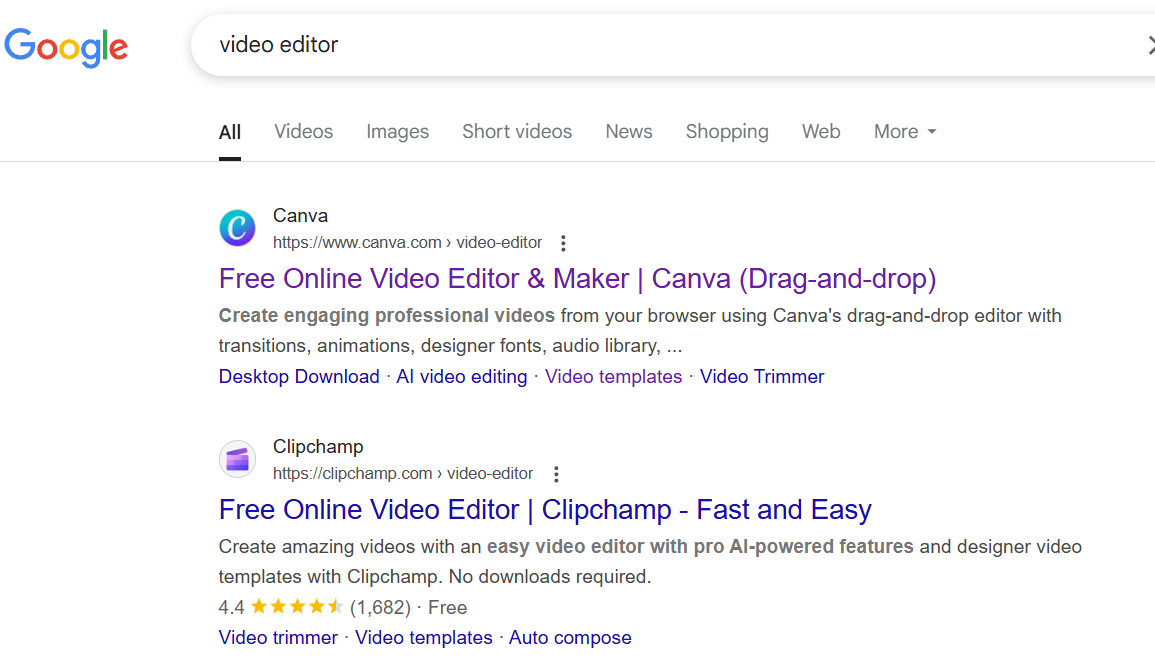
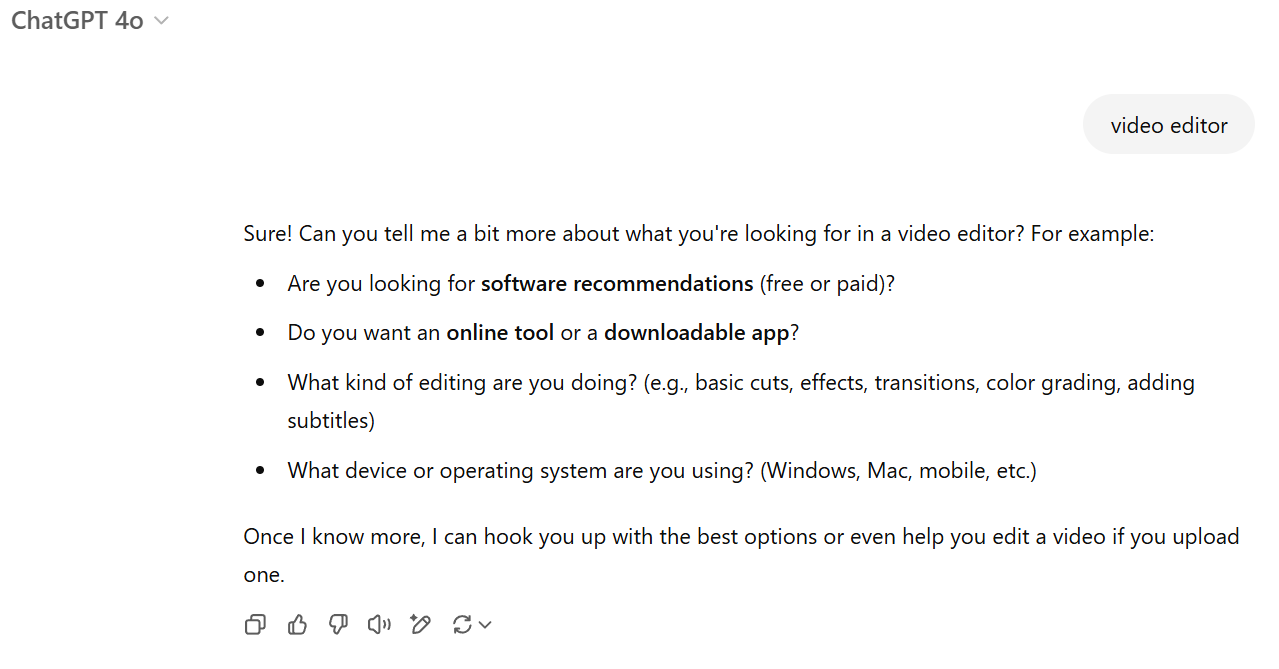
There's a clear trade-off: Google is much faster and easier to use: the average query is under two words (vs. 10 for GPT), and results are instant (vs. 10 seconds for GPT). That's why they excel at different things—Google is far superior for transactional and navigational searches, the most lucrative. Try searching "video editor" on both and see the difference.
Here’s the full picture.
The Rise of AI Search
Let’s start with what’s changed.
For years, search meant one thing: Google. You type a few words, get a page of links, and go hunting for answers.
Then came AI search — first with ChatGPT, now with smarter hybrids like Perplexity, You.com, and others. These tools do something radically different: they generate answers, pulling from web content, research, and their own training.
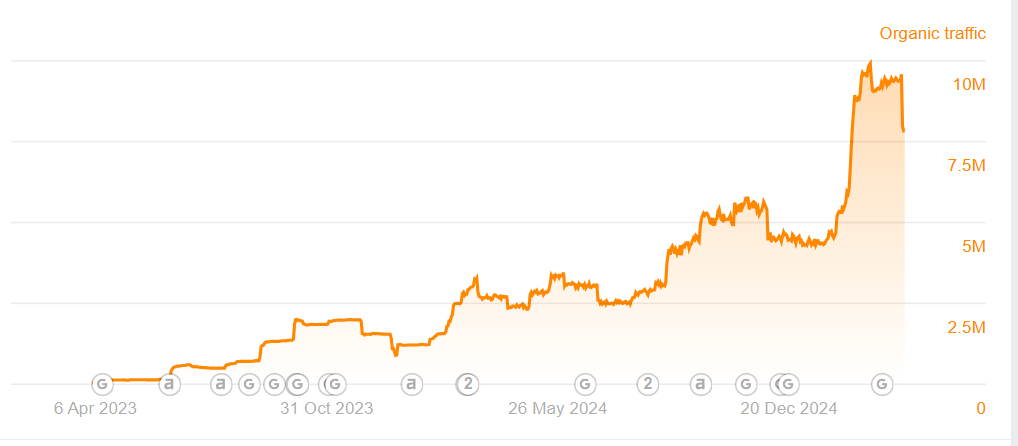
(Perplexity's traffic growth)
Instead of giving you options, they give you the answer. Or at least, their best attempt.
The Real Difference: How Each One Works
Google is a link engine.
It’s designed to index, rank, and deliver relevant pages based on keyword matches, site authority, and behavioral data. It's lightning fast and insanely optimized.
AI search is a language engine.
It’s designed to understand what you're really asking, then craft a human-like response using its training data and, sometimes, live sources.
This core difference explains everything else.
Speed vs Depth
Here’s where it gets clear:
- Google is much faster. You type keywords (on average 2 words) — “weather Paris,” “Tesla stock,” “best VPNs” — and results come instantly.
- AI is slower. You need to input a full query (on average 10 words) — “Explain how Tesla's 2025 Q1 earnings compare to 2024” — and it takes a few seconds to read, process, and respond.
Why? Because AI is doing more. It’s not just retrieving — it’s reasoning, summarizing, and generating an actual response. More time, more brainpower.
When AI is Better
AI crushes informational searches.
If your question starts with:
- “How does…”
- “Why is…”
- “What’s the difference between…”
- “Explain…”
Then GPT or Perplexity is probably better than Google. You don’t get 15 tabs. You get one well-structured answer, often with helpful follow-up suggestions.
It’s like going from a search engine to a smart research assistant.When Google Still Wins
But AI hasn’t taken over everything — and in many areas, it can’t yet compete.
When Google is Better
Google crushes transactional and navigation searches.
1. Transactional Searches
This is Google’s money zone:
- “Buy iPhone 15 Pro”
- “Best VPN deals March 2025”
- “Flight NYC to Tokyo under $700”
These are high-value, intent-heavy searches. Google is optimized to surface product links, reviews, prices, shopping filters, and more. GPT might give generic advice, but it’s not going to show you live prices or product availability.
Google still dominates the most valuable commercial keywords. That’s not changing soon.
2. Navigational Searches
Searches like:
- “YouTube login”
- “Spotify Wrapped 2024”
- “NY Times Opinion”
Google takes you straight there. AI search? It might describe the page, or tell you what it is, but it won’t take you to the link directly.
AI doesn't understand intent.
Freshness, Trust, and Transparency
Google is fresher. It crawls constantly. News breaks? You’ll see it on Google first.
Perplexity is close. It pulls real-time web results into its answers — a big leap forward.
ChatGPT, by default, is slower. Unless connected to the web (like ChatGPT Plus with browsing), it may be a few months behind.
Trust is another key factor.
- Google shows sources clearly: URLs, domains, snippets.
- Perplexity does too — inline citations, clickable links.
- GPT often doesn't — unless you explicitly ask for sources.
People still want to see where the answer came from, especially when it’s factual, controversial, or complex. This is one area where AI still has work to do.
The Future: AI + Google, Not AI vs Google
Here’s the bottom line:
AI search isn’t replacing Google — it’s transforming what search can be.
Google will always be the fastest way to get links, do research, find products, or check the latest headlines.
But AI search is taking over the middle ground — the part of search that used to take 10 open tabs, 30 minutes of reading, and some luck. Now, you can just ask.
The real shift isn’t a takeover — it’s a split.
Use Google when you want:
- Quick answers
- Shopping
- Navigation
- Real-time news
Use AI when you want:
- Depth
- Clarity
- Explanations
- Summaries
Final Thought
Will AI search replace Google?
No — but it’s already replacing how we use it.
Search is no longer one tool. It’s a toolbox. And the smarter you are about which one you grab, the better your answers will be.