How to use Google Search Console data to optimize SEO/GEO

For GEO/SEO, optimizing existing pages often brings huge traffic boost after initial coverage, yet most people don't know the simple secret 👉
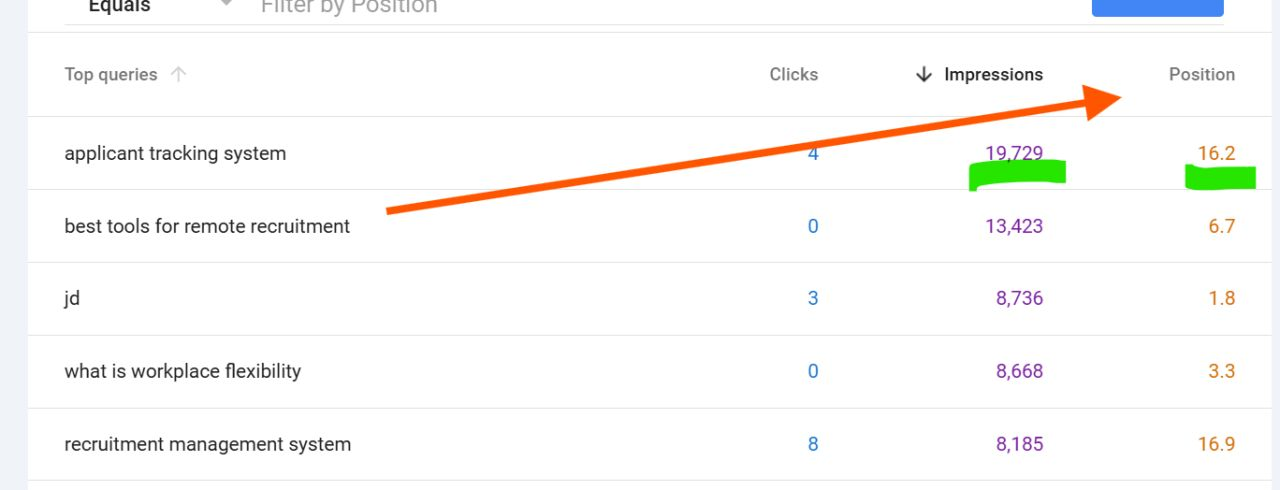
Step 1 — Find “Opportunity Pages”
From Google Search Console:
Filter:
- Impressions: high
- Position: 5–20 (best range)
- CTR: low
👉 These are “almost ranking” pages
Step 2 — Cluster queries (THIS is the key step)
Don’t just add keywords.
Group queries into:
| Cluster Type | Example |
|---|---|
| Same intent | “best ai tools for seo”, “top seo ai tools” |
| Different intent | “what is seo ai”, “how to use seo ai” |
| Different page type | comparison vs tutorial vs list |
👉 If queries = different intent → they should NOT go into same page
Step 3 — Fix page type (biggest ranking lever)
Most pages don’t rank because:
❌ Wrong page type for the query
Example:
| Query | Required Page Type |
|---|---|
| “best AI SEO tools” | Listicle |
| “what is AI SEO” | Definition / blog |
| “AI SEO tools pricing” | Comparison table |
👉 If your page is a blog but query needs a list → no amount of keywords will fix it
Step 4 — Expand coverage (but correctly)
Instead of “adding keywords,” do this:
Add missing sections based on query clusters:
| Query cluster | What to add |
|---|---|
| “pricing” queries | pricing table |
| “vs” queries | comparison section |
| “how to” queries | step-by-step guide |
| “examples” queries | real use cases |
👉 You’re not adding keywords
👉 You’re adding new information blocks
Step 5 — Internal linking (underrated)
This is where most people lose easy gains.
Do:
- Link from high authority pages → this page
- Use query-relevant anchor text
- Add hub pages
Example:
- “AI SEO tools” → link to “best AI SEO tools”
- “programmatic SEO” → link to your use case pages
Step 6 — Split pages when needed
If GSC shows mixed intent:
👉 Split into multiple pages instead of forcing one
| Signal | Action |
|---|---|
| Queries don’t match one intent | Split |
| Page too long but unfocused | Split |
| Rankings stuck at 8–15 | Usually wrong structure |
3) What actually drives ranking improvement (priority)
If you want blunt truth:
| Factor | Impact |
|---|---|
| Page type match | 🔥🔥🔥🔥🔥 |
| Coverage (information gain) | 🔥🔥🔥🔥 |
| Internal linking | 🔥🔥🔥 |
| On-page keyword optimization | 🔥 |
👉 Keywords are the least important lever now
4) Simple playbook you can give your team
| Step | Action |
|---|---|
| 1 | Pull GSC → filter pages rank 5–20 |
| 2 | Export queries per page |
| 3 | Cluster queries by intent |
| 4 | Decide: expand vs split |
| 5 | Add sections (not keywords) |
| 6 | Fix title + H1 to match main intent |
| 7 | Add internal links from relevant pages |
5) What most SEO teams get wrong
- They optimize pages
- You should optimize coverage of intent
This is why your model (data → pages at scale) is actually stronger:
👉 Instead of fixing one page
👉 You should ask:
“What % of total search intent are we covering?”