What Is Programmatic GEO? Your Gateway to Traffic in the Age of AI Search
Summary:
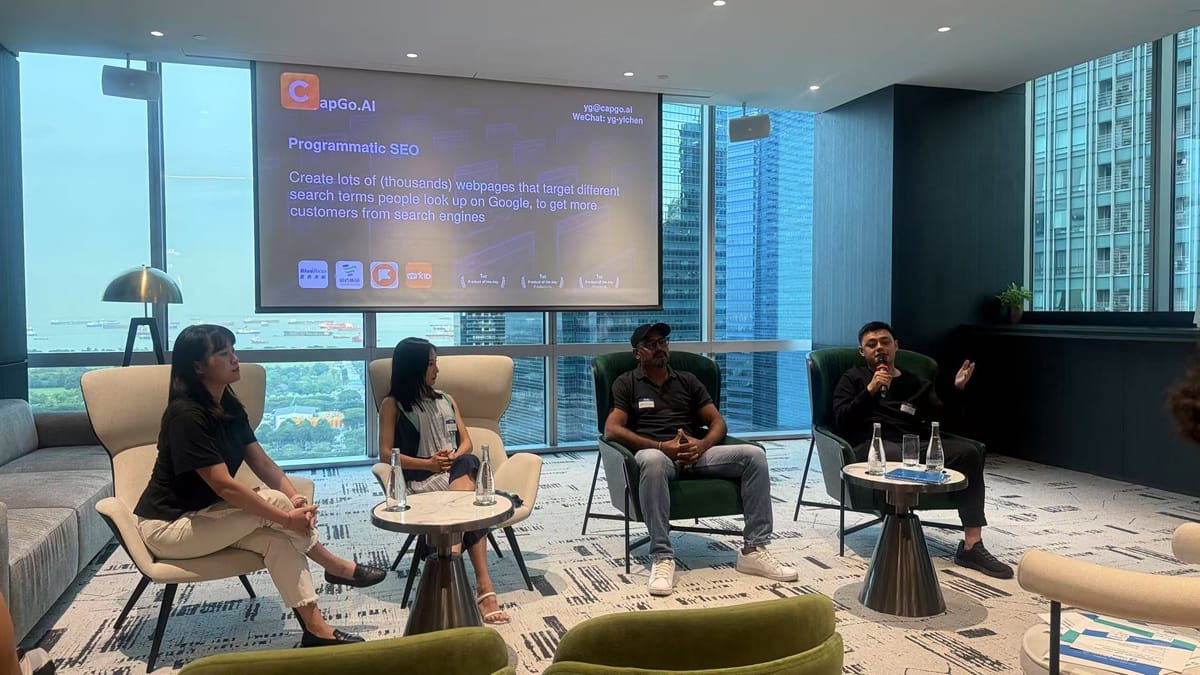
Programmatic GEO (Programmatic Generative Engine Optimization, also known as AEO) involves creating hundreds or thousands of long-tail, niche landing pages—each tailored to address specific topics of user queries in AI engines such as ChatGPT. The methodology was coined and pioneered by YG at CapGo.AI in early 2025 to address the growing importance of GEO (AEO) and the surge in long-tail queries related to it.
Why AI-Powered Search Changes Everything—and How to Get Ahead with Smart, Scalable Content
We’re living through a major shift in how people find information online.
For 20+ years, we’ve relied on search engines like Google, where people type short phrases like:
- “best sushi in San Diego”
- “CRM for small business”
- “cheap flights to Paris”
But now, people are asking AI assistants—like ChatGPT, Google Gemini, Perplexity, Claude, and others.
And when people talk to AI, they don’t search like they do on Google.
They describe what they want.
They explain their situation.
They ask real questions, not just keywords
Searches are becoming long-tail and personalized
This is where Generative Engine Optimization—or GEO—comes in.
🧠 What Is GEO (Generative Engine Optimization)?
GEO is the process of optimizing your content so it’s discoverable and useful to generative AI tools when they respond to user prompts.
While SEO is about showing up in search engines, GEO is about showing up in AI-generated answers.
Here’s the key idea:
People now use full, natural-language questions with context, preferences, and personal details. So your content must match how they ask.
🧭 Why the Shift to GEO Matters
1. People no longer “search.” They ask.
They say things like:
“I’m a vegan with a nut allergy. What’s a good protein shake brand that’s available in Canada?”
This is 100x more specific than a search query like “best vegan protein shakes.”
2. AI doesn’t rank results. It summarizes.
Unlike Google, which shows 10 links, AI gives one answer—and pulls from sources it trusts.
If your content clearly matches the user’s question, the AI might include it in its answer.
If not, you’re invisible.
3. Content must match the way real people speak.
AI systems use natural language. They look for clear, relevant, human-like writing.
This means:
- No keyword stuffing
- No generic blog posts
- No vague landing pages
🧱 What Is Programmatic GEO?
Programmatic GEO means using structured templates, automation, and smart logic to build hundreds or thousands of long-tail, niche landing pages—each designed to match specific types of user questions.
This isn’t guesswork.
You’re building a content system based on real behavior.
🎯 How Do People Ask AI Questions Today?
Let’s break it down.
People usually include 3 key things in their prompt:
- Their identity or role
(e.g., "I'm a college student", "I'm a single parent", "I'm a digital nomad") - Their preferences or constraints
(e.g., "I don’t eat meat", "I have a small budget", "I don’t like using my phone much") - The task or decision they’re trying to make
(e.g., "recommend an app", "pick a restaurant", "find a tool")
Some real examples:
“I’m a freelancer who works from cafes. What’s the best productivity app that works offline and syncs with Notion?”
“We’re looking for a pet-friendly hotel in Seattle with parking and good Wi-Fi for remote work.”
“I’m a dad planning a weekend trip with two kids under 10. What’s a good itinerary for San Diego?”
These are long-form, context-rich queries. Generic content won’t answer them.

💡 The GEO Strategy: Build Landing Pages for Each Use Case
Here’s the secret to GEO:
👉 Turn these natural questions into long-tail landing pages.
These pages should:
- Match the language people use
- Solve specific use cases
- Be easy for AI to read and summarize
- Be genuinely helpful and clearly written
Here’s how you do it:
1. Identify categories or verticals
(e.g., Restaurants, Apps, Travel, SaaS, Products)
2. Map out common personas + use cases
- “College student looking for budget travel apps”
- “Busy parent looking for fast vegetarian dinners”
- “Marketing manager choosing a CRM for a small team”
3. Use a template to create hundreds of variations:
[Best X for Y doing Z under W conditions]
Examples:
- Best note-taking app for ADHD students who get distracted easily
- Best romantic sushi restaurants in LA for anniversary dinners
- Best CRMs for solopreneurs on a tight budget in 2024
- Best travel backpacks for remote workers with laptops
✍️ How to Write a GEO-Friendly Page
Each page should include:
- A title that matches the user query
- A short intro that reflects the user's situation
- Specific, ranked recommendations with clear pros and cons
- Natural language—no jargon, no keyword stuffing
- Structured data if possible (FAQs, tables, pricing, etc.)
Example Landing Page:
“Best Meditation Apps for People with ADHD Who Hate Sitting Still”
Intro:
If you struggle with focus and can’t sit through long meditations, you’re not alone. Many people with ADHD find traditional meditation apps too rigid. But don’t worry—there are apps designed for you.
Top Picks:
- Headspace (Short Sessions, Calming UI)
- Simple Habit (Great for Busy Minds)
- Balance (Personalized Paths)
Why These Work for ADHD:
- Short sessions (5 minutes or less)
- Gentle reminders
- Flexible pacing
- Some even include walking meditations
🚀 Why Programmatic GEO Wins Long-Term
- AI usage is exploding. Billions of queries daily.
- Long-tail questions are infinite. There’s no limit to how many user scenarios exist.
- Low competition. Most brands still optimize for Google, not AI.
- High intent. When someone asks a long, specific question, they’re ready to act.
✅ Recap: The GEO Playbook
- Study how people ask AIs questions
- List user types, needs, and decision scenarios
- Build landing pages that directly match these long-tail queries
- Write in clear, natural language
- Use structured templates to scale content creation
👋 Final Thoughts: Think Like an AI Assistant
The easiest way to succeed with GEO is to stop thinking like a marketer—and start thinking like an assistant.
What would you say if someone asked that question?
Then… write that.
And repeat it across hundreds of highly-targeted pages.
That’s Programmatic GEO.