SEO and GEO Guide - From Basic to Secrets
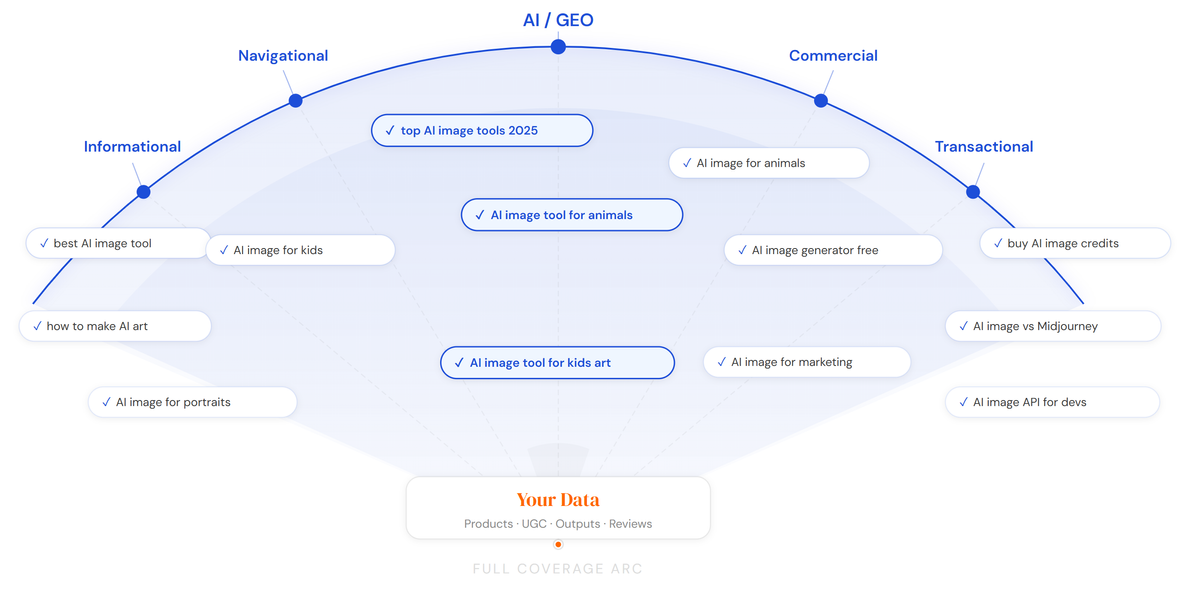
What is SEO? (Search Engine Optimization)
To get traffic from Google search.
What is GEO? (Generative Engine Optimization)
To get traffic from AI engines like ChatGPT or Google AI overview
1. The Core Philosophy
Understand questions, not keywords
Most beginners fail because they target words like "CRM software." Successful creators target intent. Every search is a person asking a question.
Intent is what answer or things are they actually looking for from the search?
For example, if they search "the best ai image tools" - they are searching for a blog that compares many tools, not a homepage about one tool. So the winning page with great ranking is a thorough comparison of many tools.
| Keyword | The "Real" Question |
| CRM software | "What CRM should I actually use?" |
| Notion vs Airtable | "Which one of these is better for my specific needs?" |
| How to do SEO | "Give me a step-by-step guide so I don't mess this up." |
The Insight: If you don’t understand the question, you will build the wrong page.
2. The Matchmaking Framework
To rank, you must master the Intent Loop:
Question -> Page Type -> Full Answer
Step 1: Understand user search intent
Think - what answer or things are they actually looking for from the search?
For example, if they search "the best ai image tools" - they are searching for a blog that compares many tools, not a homepage about one tool. So the winning page with great ranking is a thorough comparison of many tools.
Step 2: Identify the Page Type
Google and AI engines categorize information into specific "buckets." If you use the wrong bucket, you won't rank—period.
| If the user searches... | Their Intent is... | Your Page Type must be... |
| "Best [Product]" | To compare options | Listicle (Top 10, Pros/Cons) |
| "[X] vs [Y]" | To make a decision | Comparison Page (Side-by-side table) |
| "How to [Task]" | To execute a process | Step-by-Step Guide |
| "What is [Topic]" | To learn a concept | Educational Article |
| "[Product] Pricing" | To check costs | Pricing Page (Clear numbers) |
Step 3: Cover the Basics
Every page needs these four pillars:
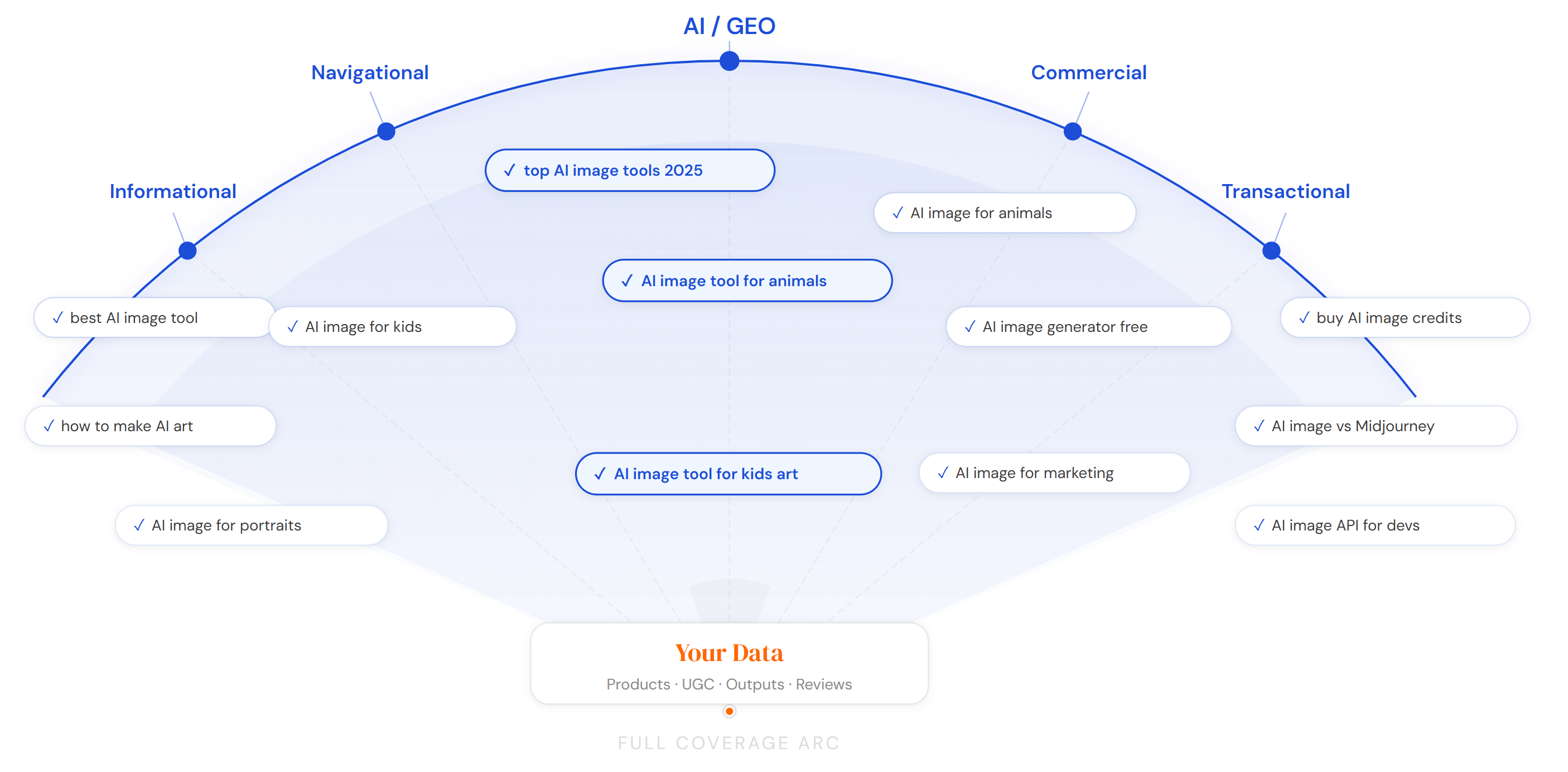
- Full Coverage: One dedicated page per specific question. There are many ways people might search your product
- Page Title: A clickable headline that matches the search.
- Meta Description: A 2-sentence summary that "sells" the click.
- Intent Matching: Using the correct format (from the table above).
3. SEO vs. GEO: The Key Differences
You need to do both to win in 2026.
Why Listicles and Long-Tail matter for GEO:
- Automated Comparison: People use AI to save time. Instead of reading 5 blogs, they ask AI to "Compare the top 3 options." If you have a clear listicle with a table, the AI can "grab" your data easily.
- Use-Case Depth: AI prompts are getting longer and more specific. You shouldn't just write "Best CRM"; you should write "Best CRM for Lawyers using Mac." That long-tail specificity is exactly what AI looks for when answering complex prompts.
4. "Information Gain" (The Secret Sauce)
In the age of AI, "average" content is dead. If your page looks like every other blog post, Google will ignore it and AI won't cite it. You need Information Gain—adding something new to the internet.
How to provide Information Gain:
Unique Data: company's info or data like UGC data, product catalog, user review, etc
Answer all users' questions for the search: If someone asks for "Best CRM," they are also secretly asking: Is it expensive? Is it easy to use? Answer those too.
The Brutal Truth: If an AI can perfectly recreate your page in 10 seconds, your page has no long-term value.
5. Your Practical Workflow
Follow these five steps for every piece of content:
- Find the Question: Use tools or look at "People Also Ask" on Google.
- Match the Page Type: Look at the top 3 results—are they lists, guides, or tables? Do what they do.
- Answer all users' questions for the search: If someone asks for "Best CRM," they are also secretly asking: Is it expensive? Is it easy to use? Answer those too.
- Add Information Gain: Insert a unique insight or a piece of data nobody else has.
- Format for AI (GEO): Use tables and clear headings. AI "scrapes" these easily to build its answers.
6. The Final Checklist
Before you hit publish, ask yourself:
- [ ] Does this match the intent (Page Type)?
- [ ] Did I answer the main question in the first paragraph?
- [ ] Is there unique data here that doesn't exist elsewhere?
- [ ] Would a user feel the need to go back to Google after reading this? (If yes, you failed).
Final Takeaway: SEO is about being found. GEO is about being chosen as the authority. To win at both, stop writing for robots and start providing the most complete, data-backed answer for the human behind the screen.